Beginning January 1, 2026, California’s new AB 723 will require real estate brokers, agents, or anyone acting on their behalf to clearly disclose when marketing images have been digitally altered—and to provide buyers access to the original, unaltered versions. The law distinguishes between acceptable standard photo edits (like white balance and exposure) and alterations that change the representation of real property (like adding grass, removing wires, or virtual staging). Rick Siegel Photography is preparing now so you’ll be ready: we’ll clearly label altered vs. unaltered images in your Dropbox folder file, provide both versions in our delivery system, to simplify disclosure requirements.
• Effective Date: January 1, 2026
• Applies to: real estate agents, brokers, developers, and marketing staff involved in property advertising.
• The bottom line: Any “digitally altered” ( AI-generated or typical software edited) photo must include a clear disclosure and access to the original version
• The goal: Promote accurate, transparent real estate marketing and reduce consumer deception claims related to images (expanding NAR art 2, 12)
• Why compliance matters: violations fall under Real Estate Law; willful violations are crimes

Real estate professionals have always balanced the need to market properties beautifully while ensuring that representations remain truthful (NAR Article 2 & Article 13). Historically, misrepresentation concerns centered on property lines, access, easements, fixtures, or building features. But the last decade—and especially the recent explosion of AI photo tools—has introduced a new challenge: images can now be altered faster, easier, and more convincingly than ever.
At Rick Siegel Photography, we’ve always supported Agents in proper representation of listings, and frankly, we’re not new to the many legal and ethical challenges regarding digitally altering images for marketing purposes, but this new law will codify parts of the disclosure process that we have always provided. For example, we’ve offered “digital fire” in fireplaces at no charge for many years.
To address this, the California Legislature passed AB 723, a new law taking effect January 1, 2026, requiring disclosure whenever real estate marketing images are digitally altered in ways that could affect a buyer’s understanding of the property. In this post, we break down what the bill says, what is still unclear, how Rick Siegel Photography is preparing to support you, and what you should be asking your Brokerage, MLS, or Association or Realtors® as guidelines continue to develop.
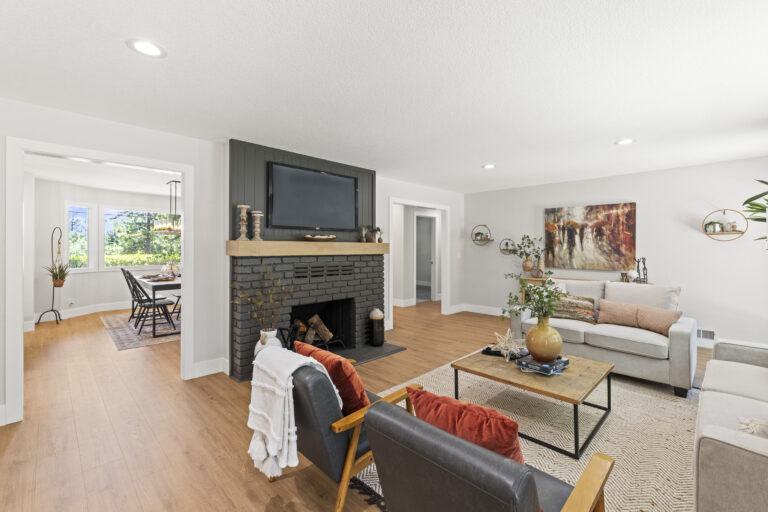
While AB 723 is brief, the implications are significant. It amends the California Business and Professions Code by adding Section 10140.8, creating disclosure requirements for digitally altered real estate images
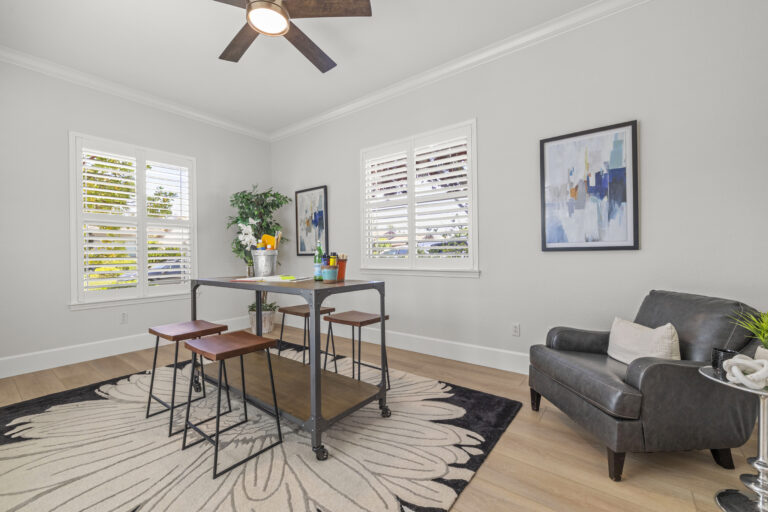
(a) (1) A real estate broker or salesperson, or person acting on their behalf, who includes a digitally altered image in an advertisement or other promotional material for the sale of real property shall include in the advertisement or promotional material a statement disclosing that the image has been altered and a link to a publicly accessible internet website, URL, or QR code that includes, and clearly identifies, the original, unaltered image. The statement shall be reasonably conspicuous and located on or adjacent to the image and shall include language indicating that the unaltered images can be accessed on the linked internet
website, URL, or QR code.
(2) If an advertisement or promotional material described in paragraph (1) is posted on an internet website over which the real estate broker or salesperson, or person acting on their behalf, has control, they shall include the unaltered version of the images from which the digitally altered images were created in the posting. A person subject to this paragraph may comply with this requirement by including a link to a publicly accessible internet website that includes, and clearly identifies, the original, unaltered image. If the real estate broker or salesperson, or person acting on their behalf, complies with this requirement by including a link to the unaltered images, the statement required by paragraph (1) shall include language indicating the unaltered images can be accessed on the linked internet website, URL, or QR code.
(b) (1) For purposes of this section, “digitally altered image” means an image, created by or at the direction of the real estate broker or salesperson, or person acting on their behalf, that has been altered through the use of photo editing software or artificial intelligence to
add, remove, or change elements in the image, including, but not limited to, fixtures, furniture, appliances, flooring, walls, paint color, hardscape, landscape, facade, floor plans, and elements outside of, or visible from, the property, including, but not limited to, streetlights, utility poles, views through windows, and neighboring properties.
(2) “Digitally altered image” does not include an image where only lighting, sharpening, white balance, color correction, angle, straightening, cropping, exposure, or other common photo editing adjustments are made that do not change the representation of the real property
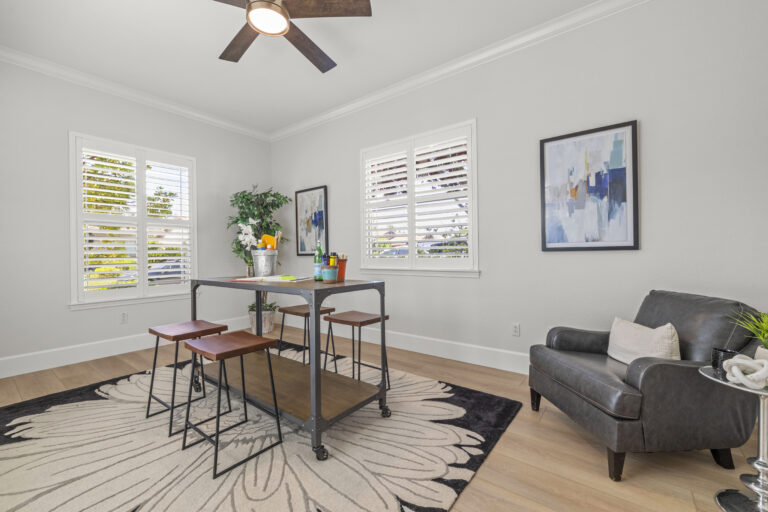
According to Section 10140.8(b)(1), a digitally altered image is any image that has been edited—using photo software or artificial intelligence—to:
• Add, remove, or change elements of the property.
• These elements include, but are not limited to:
o Fixtures
o Furniture
o Appliances
o Flooring
o Walls and paint color
o Landscaping or hardscaping
o Facades
o Floor plans
o Items outside the property (streetlights, views, utility poles, neighboring homes, etc.)
The law seems to intentionally use broad language—“including but not limited to”—which means this definition may evolve. It does not list specific tools or services, so industry interpretation will play a major role over the next year.

Section 10140.8(b)(2) states that routine image corrections do not require disclosure when they do not change the representation of real property.
These acceptable adjustments include:
• Lighting corrections
• Sharpening
• White balance
• Color correction
• Angle or straightening adjustments
• Cropping
• Exposure
• Any other “common photo editing adjustments” that simply present the property accurately and clearly
This is the category under which standard real-estate-industry image processing falls.

1. Include a Clear Disclosure on or Near the Altered Image
Agents must add a “reasonably conspicuous” statement “on or near the image” indicating the image has been altered.
2. Provide Access to the Original, Unaltered Images
The disclosure must include a link, URL, or QR code leading to the original image(s).
3. If the Agent Controls the Website, They Must Include the Unaltered Versions
If the ad appears on a website the agent controls, the unaltered images must be posted directly or accessible via a link.
4. Language Must Clearly State Where Buyers Can View the Originals
The disclosure must explicitly say that unaltered versions are available at the linked URL. This applies to anyone acting on behalf of the agent, including marketing teams, assistants, etc.
Under California state law and the California Association of Realtors (CAR):
• Real property includes land and anything permanently affixed to it.
• This means structures, fixtures, improvements, and the land itself.
• It does not include personal property or temporary items.
AB 723 focuses on representations of real property—the physical characteristics of the home and lot that would reasonably influence a buyer’s perception.

To help clarify what falls under “common editing adjustments” vs. “alterations,” here is what Rick Siegel Photography does by default to all images—edits that should not require disclosure under Section 10140.8(b)(2):
Standard Photo Corrections (Automatic Adjustments and Corrections)
• White balance
• Exposure
• Shadows
• Highlights
• Lens correction
• Vignetting adjustments
• Contrast
• Saturation
• Color cast reduction
• Remove sensor dots
• Add blue skies*
• Adjust verticals and horizontals
• Sharpness
• Noise reduction
• Chromatic aberration reduction
• Crop
• Resize
Most of these edits maintain truthful representation and fall squarely under the bill’s exclusions. There has been speculation that sky replacements may need to be disclosed, however sky replacement language is absent from the bill. Moreover, it’s worth noting that
most Real Estate Photography providers have been doing sky replacements and corrections for over a decade. If you list in the Bay Area, specifically SF, it’s almost guaranteed skies have been modified.
These May Require Disclosure Under AB 723
*These May Require Disclosure Under AB 723
Rick Siegel Photography provides several optional enhancements that change the representation of real property and may require disclosure:
Free Additional Retouching Options (Alterations*)
• Turn on lights
• Green grass
• Repair or replace grass
• Remove garden hoses or trash cans
• Blue pool
• Add pool water
• Remove pool cleaners
• Remove cords
• Add fire to fireplace
• Add TV/PC screens
• Add candles
• Remove carpet indentations
• Remove fridge clutter
• Fix driveway cracks
• Repair drywall or blemishes
These adjustments alter elements of the property and therefore, may fall under the “digitally altered image” definition in the bill. Open Homes will continue to provide these services—but it will be up to the Agents to maintain compliance. Rick Siegel Photography will continue to provide both versions that specifically fall under the current version of the law and can also provide any unaltered image at the agent request free of charge.
Rick Siegel Photography is committed to making compliance simple, transparent, and built into your existing workflow.
1. Delivering Altered + Unaltered Images Clearly Labeled
• We include originals in a separate folder and virtual images in a different folder.
• We deliver file names that reflect the distinction
• We segment services such as virtual staging or decluttering, automatically separate folders.